
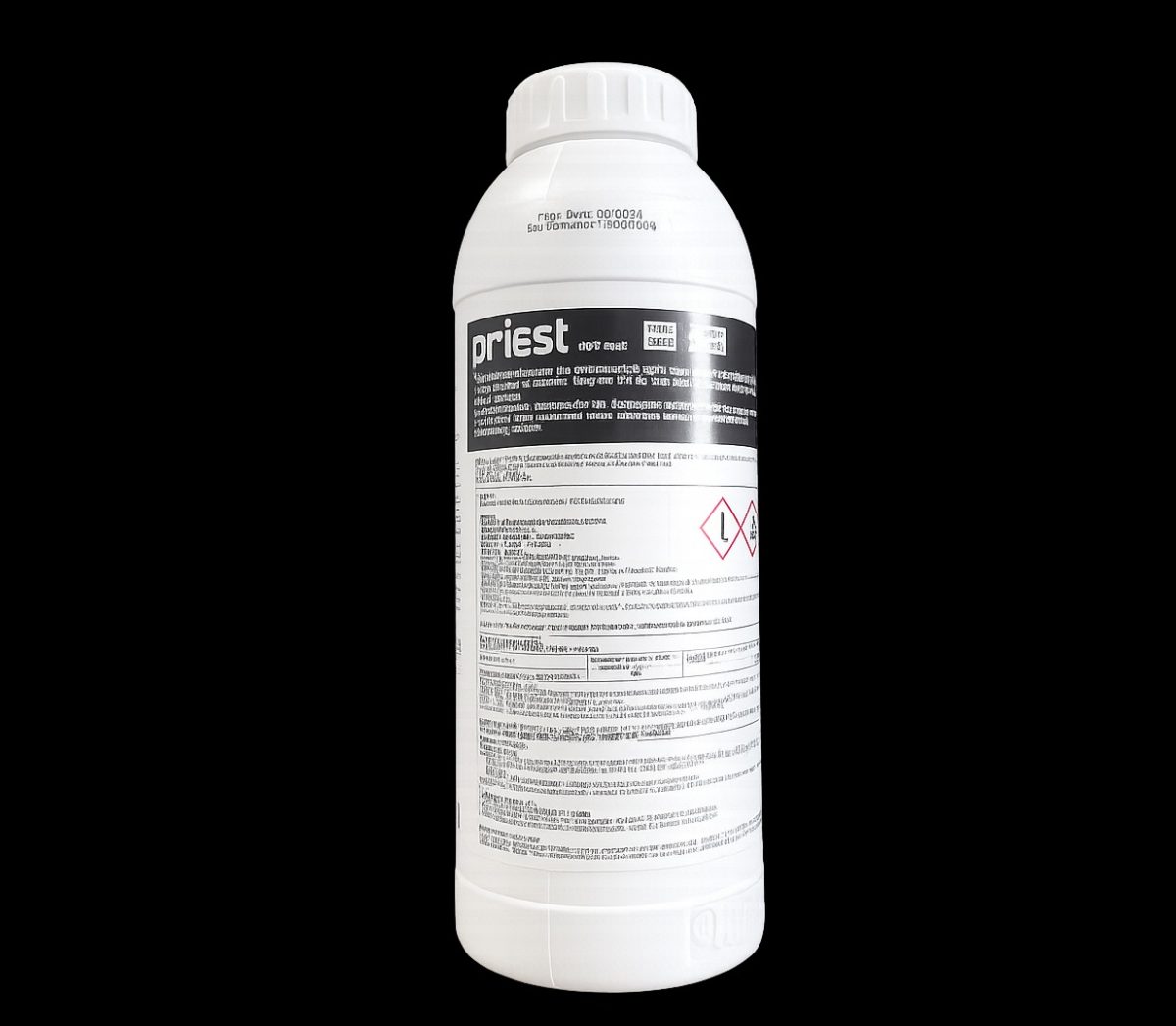
Priest 1L – (Same Active as Praxys)
£47.99 inc. VAT.
Description
- MAPP No – 21518
- Active Ingredient – 80 g/l clopyralid, 2.5 g/l florasulam and 100 g/l fluroxypyr
- Area Covered – Up to 10,000m2
- Pack Size – 1Ltrs
DESCRIPTION
Priest is a selective, systemic, post-emergence herbicide designed for use in managed amenity turt, lawns, and amenity grassland. It combines three modern active ingredients with two different modes of action, delivering fast and complete control of broad-leaved weeds.
Key Features:
Systemic action: Translocates through the entire plant for complete kill, including roots
Rainfast within 1 hour
High selectivity: Safe on established and young turf (can be used 8 weeks post-germination)
Flexible application window: March to October, when weeds are actively growing
Reseeding possible just 3 days after application Maximum 1 application per year
Application Guidelines:
Avoid mowing 3 days before and 3 days after treatment
Boom Sprayer Rate: 1.0 – 2.0 L/ha
Knapsack Rate: 10 – 20 ml in 2 L of water treats 100 m2
Weeds controlled
Birds foot, trefoil, black medick, bristly oxtounge, common cat’s-ear, creeping cinque foil, sorrell, white clover, common daisy, common dandelion, greater plantain, common mouse-ear, ribwort plantain, self heal, creeping buttercup, spear thistle
| Pack Size | 1L |
| Contains | 144g/L fluroxypyr, 80g/L clopyralid, 2.5g/L florasulam |
| Application Rate | 1-2L per hectare |
| Water Volume | 200L per hectare |
Additional Information
- Do not use where clippings are collected for use in mulch, compost or green waste
- Do not use on land that will be grazed by livestock or where vegetation will be used for animal feed or bedding within 12 months of treatment
- Avoid contact with non-target plants
- Allow an interval of four weeks between application and re-seeding
- Avoid applying when turf is wet or under stress
Active Substances
Clopyralid and Fluroxypyr
Bio-Chemical Mode of Action: Clopyralid and Fluroxypyr belong to the synthetic auxins group of herbicides.
Synthetic auxins work by inducing rapid abnormal cell growth and development in the stems, petioles and leaves of susceptible plants causing cell bursts and ultimately cell and plant death.
Mobility: Clopyralid and Fluroxypyr are systemic penetrants which means that the active substance can be translocated downwards through the plant within the phloem (sugar conducting tissues) and upwards through the plant within the xylem (water conducting tissues).
Application timing: Systemic auxins are best applied when the weeds are actively growing. They are generally more effective when target plants are younger and in their vegetative phases.
Resistance: The incidences of resistance to synthetic auxins remains relatively low which is assumed to be because the herbicide has multiple sites of action.
However, resistance to synthetic auxins has been observed globally with 36 species being confirmed as resistant as of 2017. Best management practices, such as alternating with products with a different mode of action and using cultural weed control methods, will help to reduce the risk of further resistance.
Florasulam
Bio-Chemical Mode of Action: Florasulam belongs to the ALS (Acetolactate Synthase) Inhibitors group of herbicides.
Acetolactate synthase is an important enzyme involved in the biosynthesis of branched-chain amino acids. ALS inhibitors interrupt this process causing the plant to initially become chlorotic before necrosis of plant tissues followed by whole plant death occurs.
Mobility: Florasulam is a systemic penetrant which means that the active substance can be translocated downwards through the plant within the phloem (sugar conducting tissues) and upwards through the plant within the xylem (water conducting tissues).
Application timing: ALS inhibitors are best applied when the weeds are actively growing. They are generally more effective when target plants are younger and in their vegetative phases.
Resistance: Resistance to ALS inhibitors is a relatively frequent occurrence due to their high activity on sensitive biotypes and soil residual activity. Best management practices, such as alternating with products with a different mode of action and using cultural weed control methods, will help to reduce the risk of further resistance.
Additional information
| Weight | 2 kg |
|---|
Application Rate
Knapsack Application Rate
| Bird’s foot trefoil, black medick, bristly oxtongue, common cat’s ear, creeping cinquefoil, sorrel, white clover | 10 ml in 2 L water |
| Common daisy, common dandlion, common mouse-ear, ribwort plantain | 15 ml in 2 L water |
| Slender speedwell, creeping buttercup, spear thistle | 20 ml in 2 L water |
Boomspray Application Rate
| Bird’s foot trefoil, black medick, bristly oxtongue, common cat’s ear, creeping cinquefoil, sorrel, white clover | 1 L/ha in 200 L/ha water |
| Common daisy, common dandlion, common mouse-ear, ribwort plantain | 1.5 L/ha in 200 L/ha water |
| Slender speedwell, creeping buttercup, spear thistle | 2 L/ha in 200 L/ha water |
Disclaimer
DISCLAIMER
SAFE USE OF PESTICIDES
“By law, everyone who uses pesticides professionally must have received adequate training in using pesticides safely and be skilled in the job they are carrying out.”
As from the 26th November 2015 any individual who purchases pesticides authorised for professional use must ensure that the intended end user holds the relevant specified certificate/s. (Section 9 (5) The Plant Protection Products (Sustainable Use) Regulations 2012)
Pesticides approved for professional use must only be used by users holding the relevant specified certificate/s. (Section 8 (1) The Plant Protection Products (Sustainable Use) Regulations 2012)
(Part III of the Food and Environment Protection Act 1985, and related Codes of Practice)
More information on how to get the necessary certificates is available upon request, and a member of our team will get back to you.
Should you purchase this product please be aware that you are purchasing a professional pesticide product.
Always read the product label before use.
You may also like…


Related products
-
Sale!

Gallup Hi-Aktiv 490g/Glyphosate 5Ltr
Original price was: £80.99.£62.99Current price is: £62.99. inc. VAT. Add to basket -
Sale!

Gallup Home and Garden ® Industrial Strength Weed Killer (with Amateur user Label)
Price range: £19.95 through £33.99 inc. VAT. Select options This product has multiple variants. The options may be chosen on the product page -

Greenforce Lawn Weedkiller 1L (Kills weeds in Grass, but does not kill Grass!)
£21.45 Add to basket

Reviews
There are no reviews yet.